The Challenge
World of Tanks has run Lunar New Year events for years, but they were always built around missions, sales, and crates. There was never a dedicated game mode with its own gameplay. 2026 changed that. For the first time, the Lunar event shipped with a fully custom 7v7 mode, so the progression, missions, rewards, and pacing around it had to be designed from scratch to fit mechanics that hadn’t existed before.
I had to build the progression economy, the mission structure, and the reward pipeline from zero, make sure it all worked mathematically, confirm the pacing would keep players engaged with the game mode rather than ignoring it, and do it all without breaking the broader game economy. Everything was tightly coupled with the new gameplay, so it had to be right.
What I Did
I was the Meta Designer on this event. These were the parts I owned:
Progression System Design
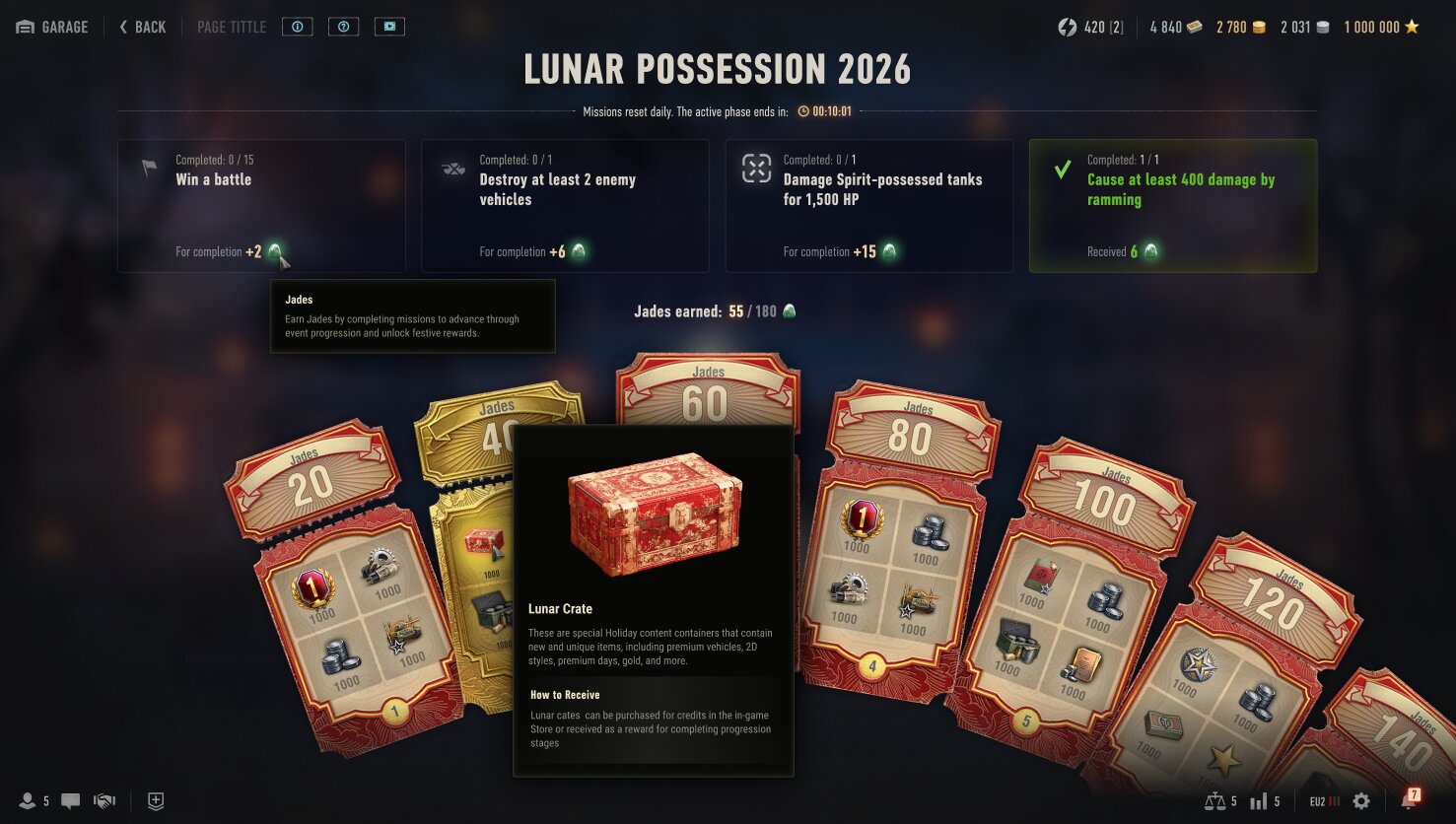
I designed the entire progression economy from scratch. The event used a custom currency called “Jades,” and I built a 9-stage reward track around it. The key design decision was splitting the event into two phases: a Paced Period where daily mission caps controlled how fast players could progress, and a Catch-up Period where those caps were removed so latecomers could still finish.
I ran mathematical pacing simulations modeling two player profiles, a highly committed player and an average casual, to make sure the progression was completable for dedicated players while still feeling accessible. The simulations confirmed the numbers worked, and the system shipped without meaningful issues.
After the main 9 stages, I also built an infinite post-progression loop so players who finished early always had something to work toward.
Mission Design

I designed all daily missions for the event across three difficulty tiers: a low-effort repeatable mission, two standard missions, and one high-difficulty special mission. Each had its own conditions, reward values, and repeatability rules tailored to the game mode.
I also designed supplemental missions that ran in the Random Battles tab alongside the main event, giving players extra objectives and rewards whether or not they were actively playing the Lunar mode.
Technical Configuration
I authored and maintained the XML configuration files that powered the progression system: event settings, quest structures, stage thresholds, mission logic, and the post-progression loop. I cross-referenced everything against internal documentation to make sure it was correct before it went live across all server regions.
Player-Facing Info Page
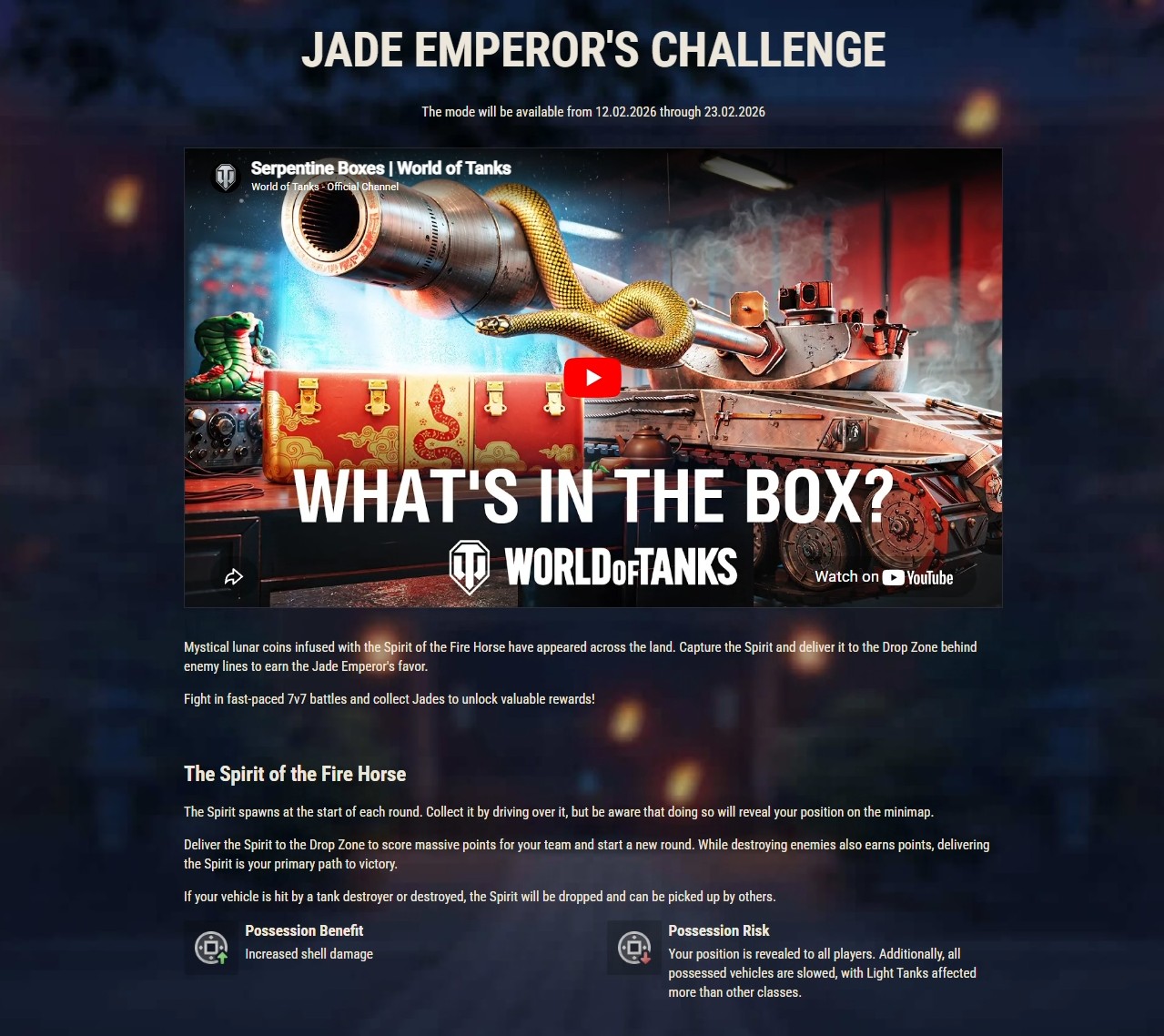
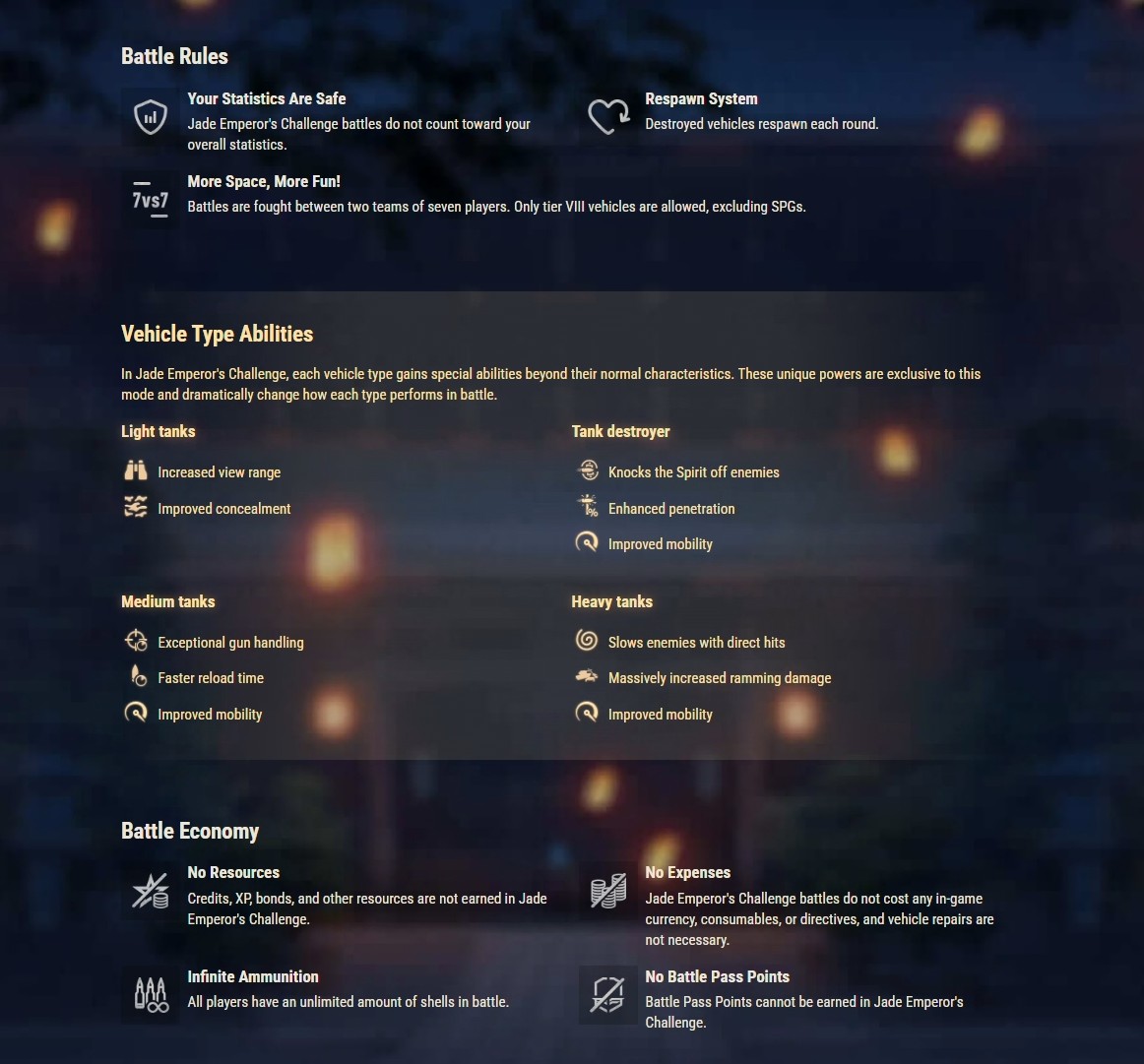
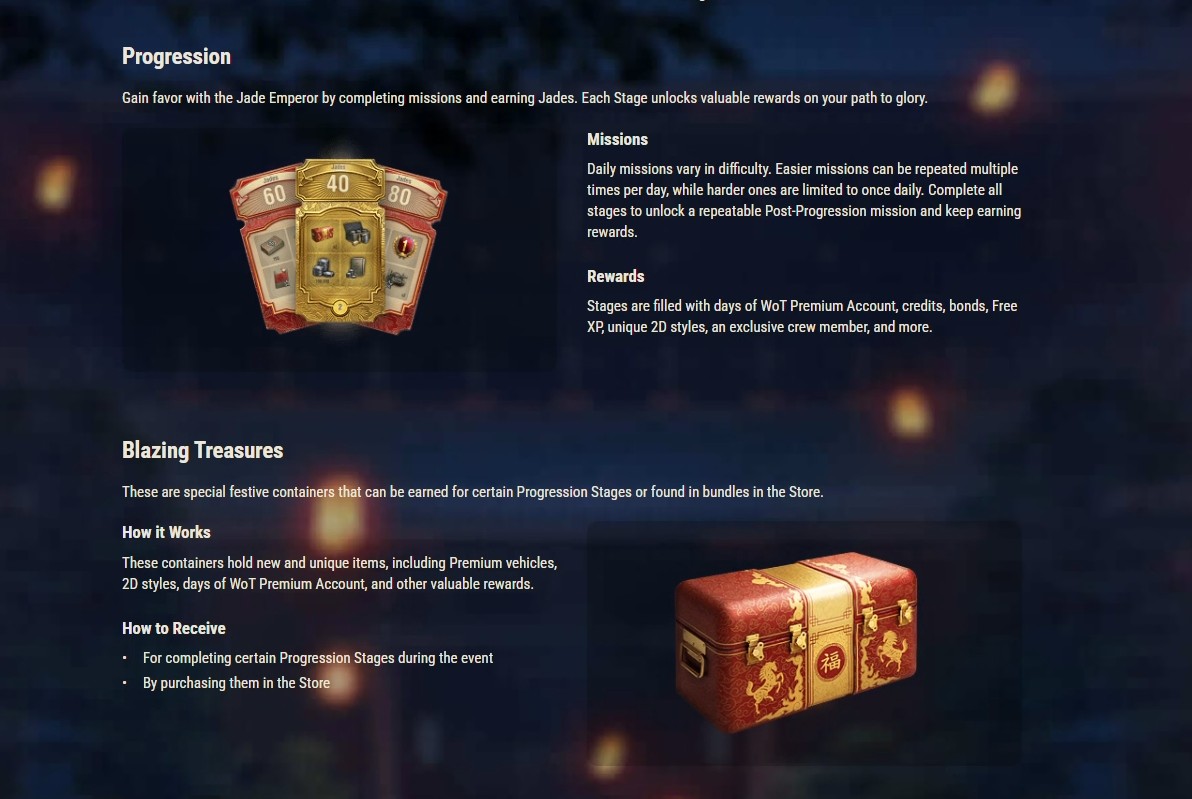
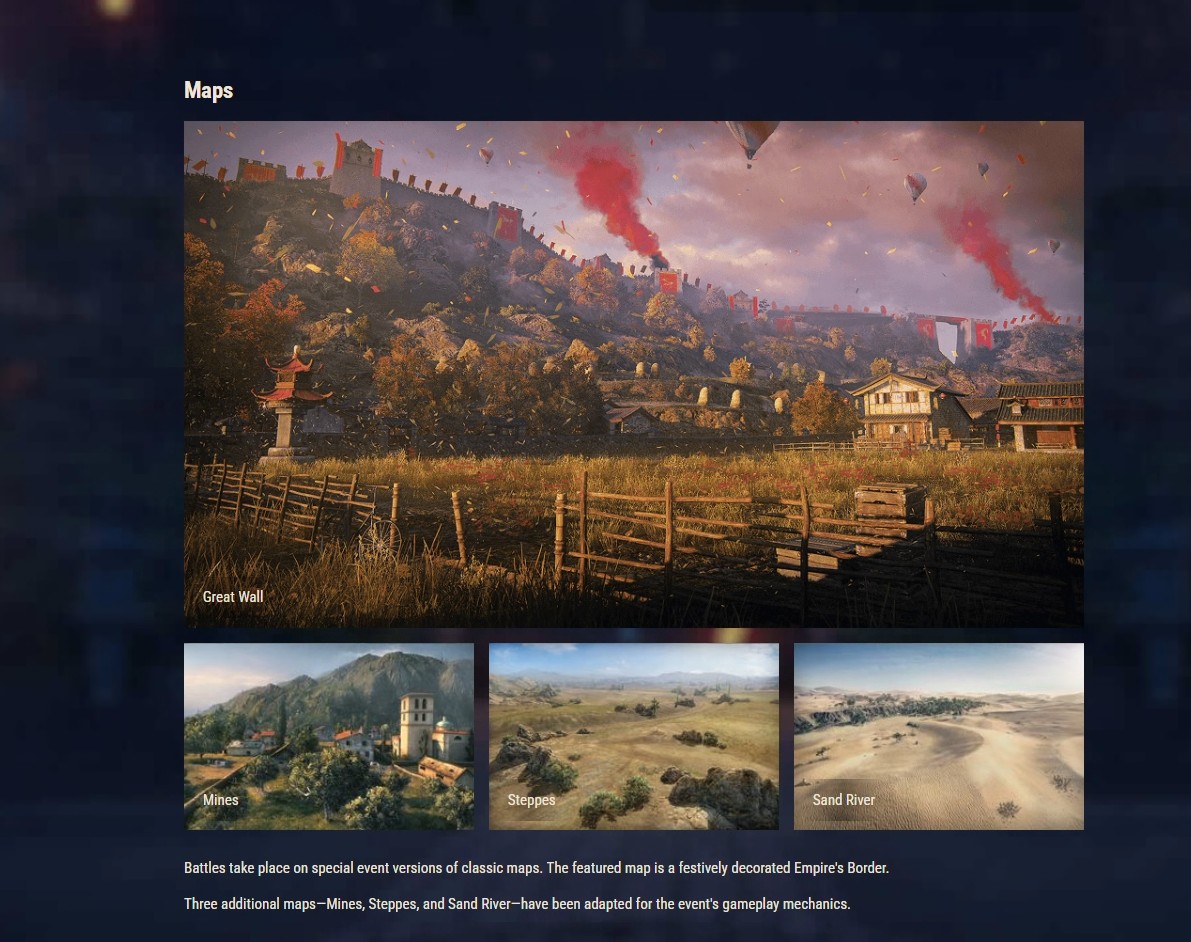
Typically, in-game info pages for events like this are straightforward, built with standard templates that have been around for a long time. The technology behind them is old and limited in what it can do visually. For Lunar 26, I wrote custom code and templates that made the info page look much better than earlier ones. The page displays through a web layer inside the game client, and I made sure the custom work was fully compatible with the rendering technology and all its constraints. It was the first time custom templates like this were used for an event info page.
Beyond the visual side, I wrote all the UI copy, defined the content block structure, and specified the UX requirements for how the page should behave and link back into the event lobby.
Documentation
I authored the full specification-level documentation that served as the source of truth for UX designers, developers, QA, and publishing. This covered the progression system, all missions, and the Random Battles supplemental missions.
Cross-Team Collaboration
I coordinated with UX designers on Figma layouts and UI component behavior, with QA on testing criteria, with the community team on player-facing copy, and with gameplay designers to make sure mission objectives were achievable and meaningful within the game mode’s scoring system.
Results & Post-Launch Evaluation
The progression system and missions were well received. The numbers are confidential, but tens of thousands of players completed the full 9-stage progression, and a significant portion of them went on to engage with the post-progression loop. The pacing worked as designed, and the economy held up.
We ran a team retrospective after the event. The meta layer (my area) came out clean. The retrospective found a few things to improve, but the core systems I owned performed well. The challenges that surfaced were on the gameplay clarity side, specifically that the inverted delivery mechanic confused players who expected to carry the objective to their own base. I prepared the retrospective analysis and argued that changing the missions couldn’t fix a clarity problem in the core game loop. I proposed structural improvements for future events: clearer ownership between gameplay and meta systems, more frequent integrated playtests, and better synchronization between dependent systems.
The Event
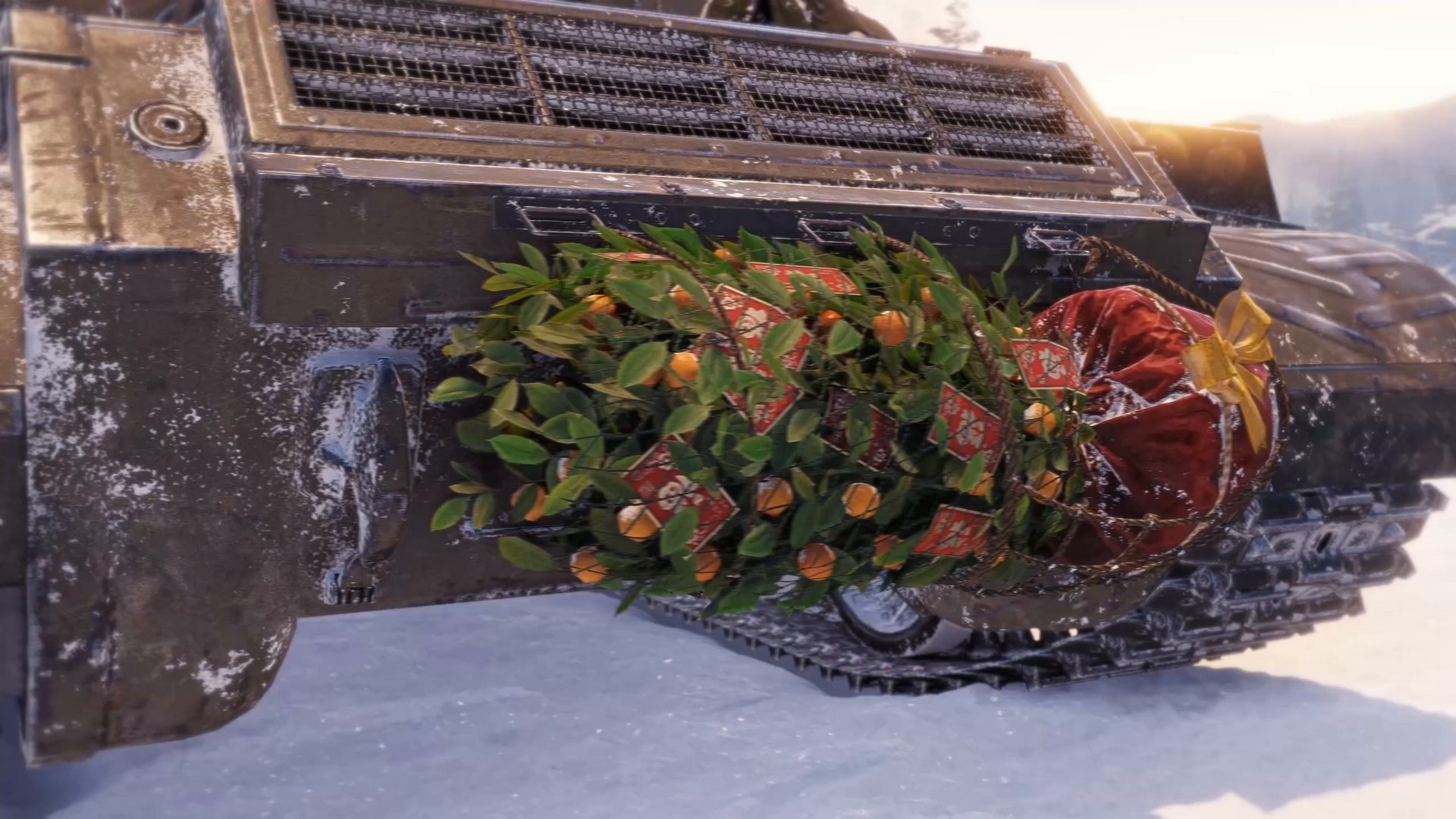
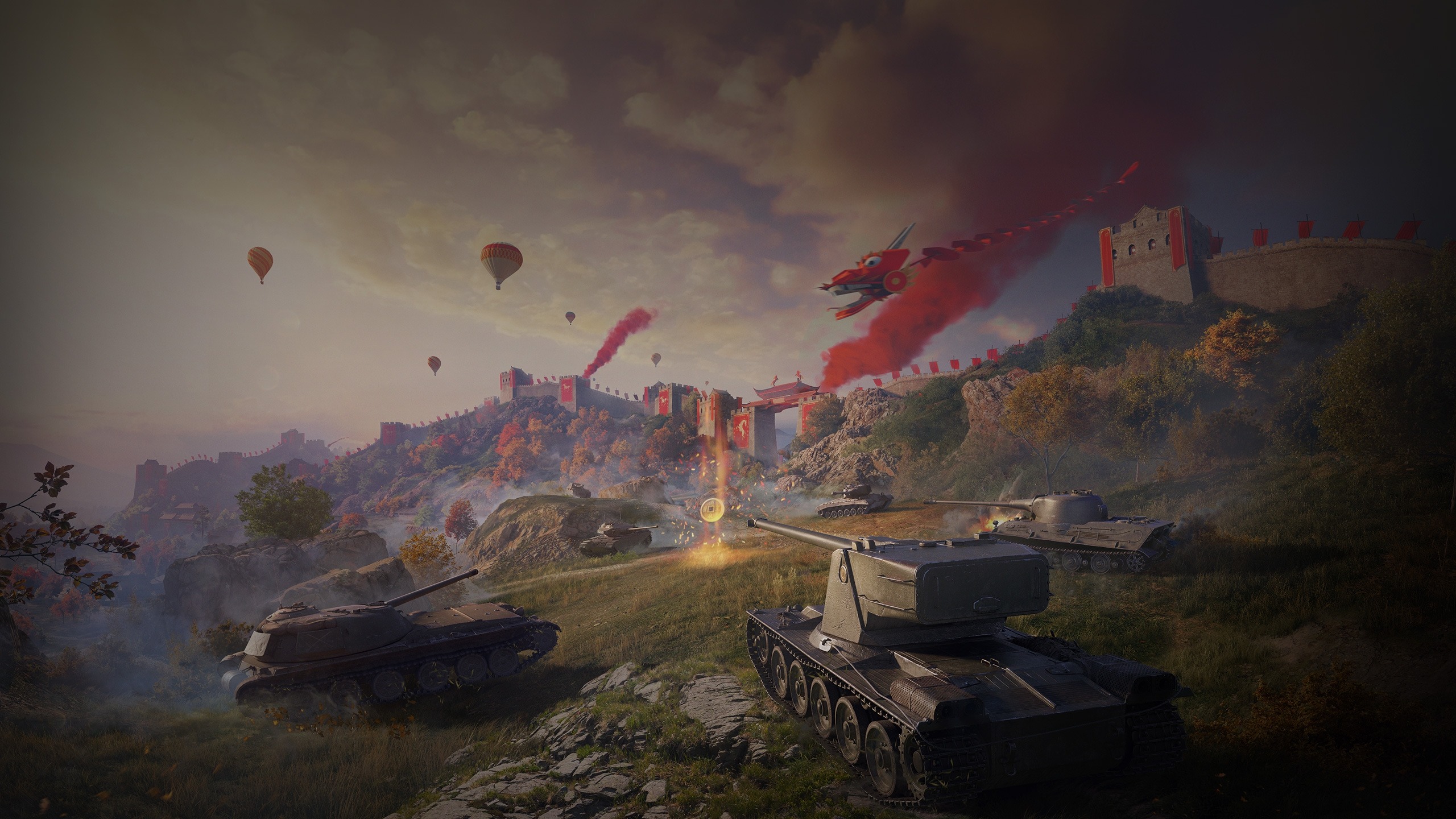
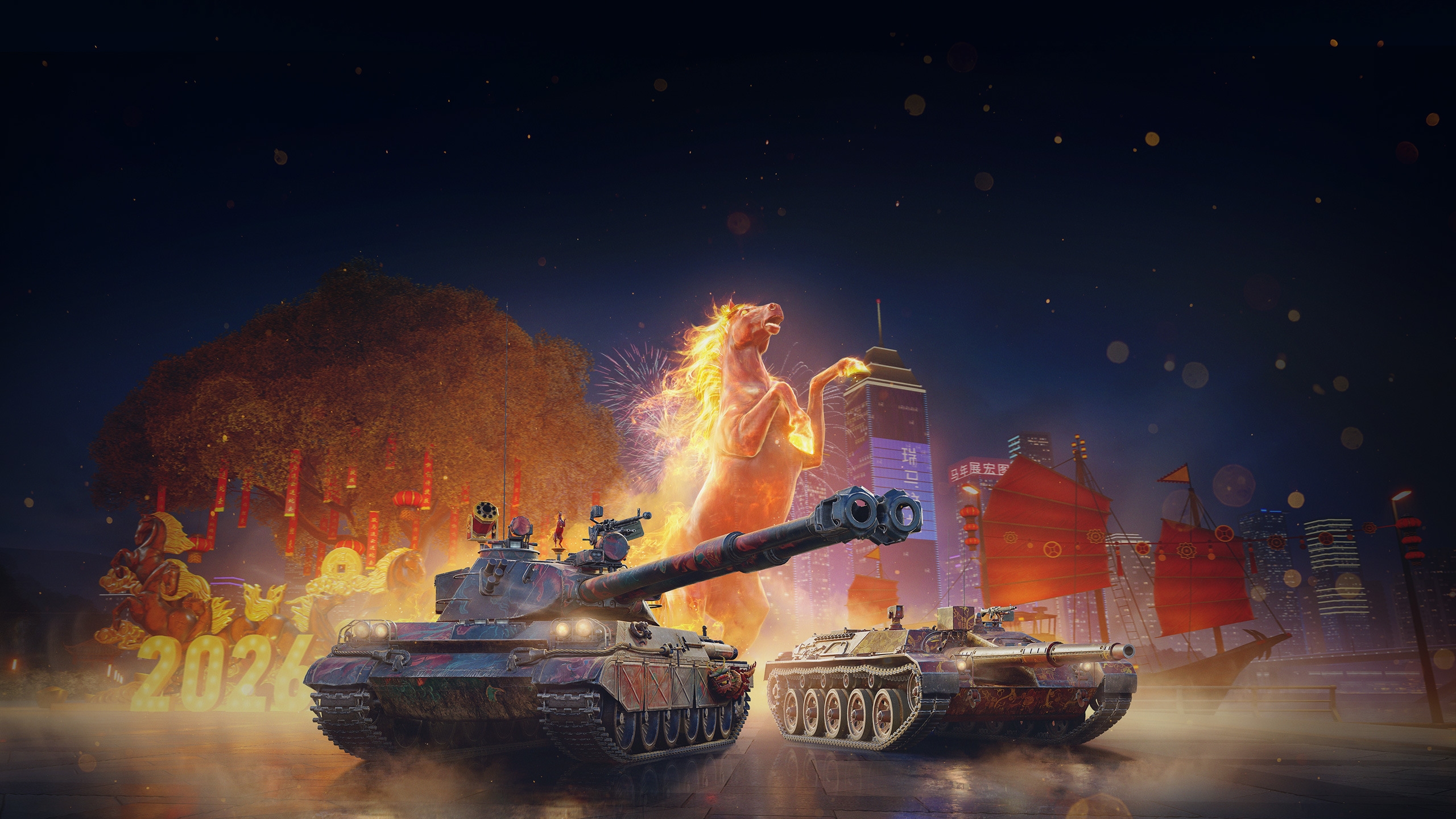
Lunar 26 was a limited-time seasonal event for World of Tanks celebrating the Chinese Lunar New Year of 2026, the Year of the Fire Horse. It introduced a custom 7v7 game mode called Jade Emperor’s Challenge that ran for 11 days across all major server regions: EU, NA, Asia, and CN.
The event was designed with three core goals: deliver a fast-paced gameplay experience that stands apart from the game’s standard modes; be inclusive of all players regardless of progression or skill level; and celebrate the Lunar New Year through a rich Chinese Zodiac-inspired theme.
Compared to Lunar New Year events from previous years, which leaned heavily on missions, sales, and crates, 2026 stood out because it shipped a full limited-time mode with its own rules and class-specific mechanics.
How the Game Mode Worked
The core concept was a capture-the-flag mechanic with a twist. A glowing object called the Spirit of the Fire Horse spawned in the center of the map. Any tank could grab it by driving over it. The catch: you had to deliver it to the enemy’s side, not your own.
Holding the Spirit gave the carrier combat buffs but also came with serious drawbacks: continuous HP drain, position revealed on the minimap, and reduced speed for certain tank classes. This created a risk-reward dynamic where every class played a distinct role. Light tanks were fast pickups but fragile carriers. Heavy tanks could absorb damage but were slow. Tank Destroyers became high-risk glass cannons.
Matches were round-based with respawning. When a team scored a delivery, everything reset for a new round. Scoring combined deliveries with kills and damage, with multipliers based on Spirit possession.
Matchmaking & Rules
The mode was restricted to a single tank tier with SPGs excluded. Teams were 7v7 with enforced class distribution. Infinite ammunition, no repair costs, and no consumable costs made it accessible to everyone.
Maps & Setting
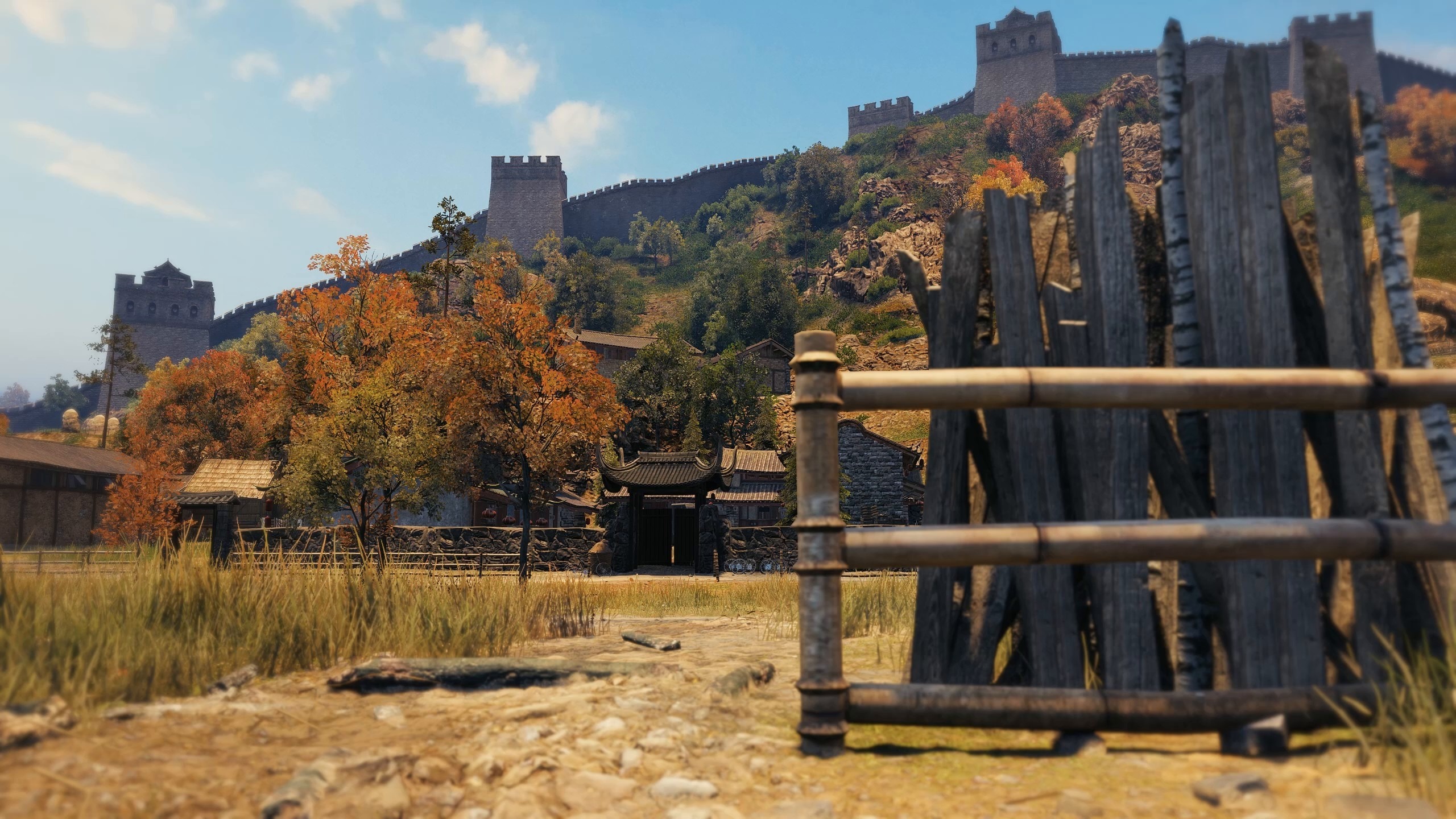
The main arena was a Lunar-decorated version of an existing map, fully themed with shrine gardens, Spirit objects, and visual effects. Three additional arenas supported replayability with lighter theming.
Narrative
The story centered on the Jade Emperor from Chinese mythology, who sent the Spirit of the Fire Horse to Earth. Two armies compete to capture and deliver it to earn the Emperor’s favor. The narrative was designed to be relaunchable each year by swapping the zodiac animal and element.
All in-game terminology was themed: progression currency became “Jades,” scoring points became “Emperor’s Favor,” and capture zones became “Shrine Gardens.”
Progression & Rewards
The 9-stage progression rewarded players with Premium Account time, credits, bonds, XP, boosters, unique cosmetic styles, a unique Commander, a special medal, and event-exclusive crates. The Paced/Catch-up structure and the post-progression loop I designed were there to keep the economy fair for early and late players alike.
Key Takeaway
The progression system shipped clean. The challenges that came up post-launch were rooted in core gameplay clarity, not the meta layer. That reinforced something I think about a lot: no progression system, no matter how well designed, can compensate for confusion in the game loop itself. System design and game design have to be built together, not side by side. This event is where I really learned that.